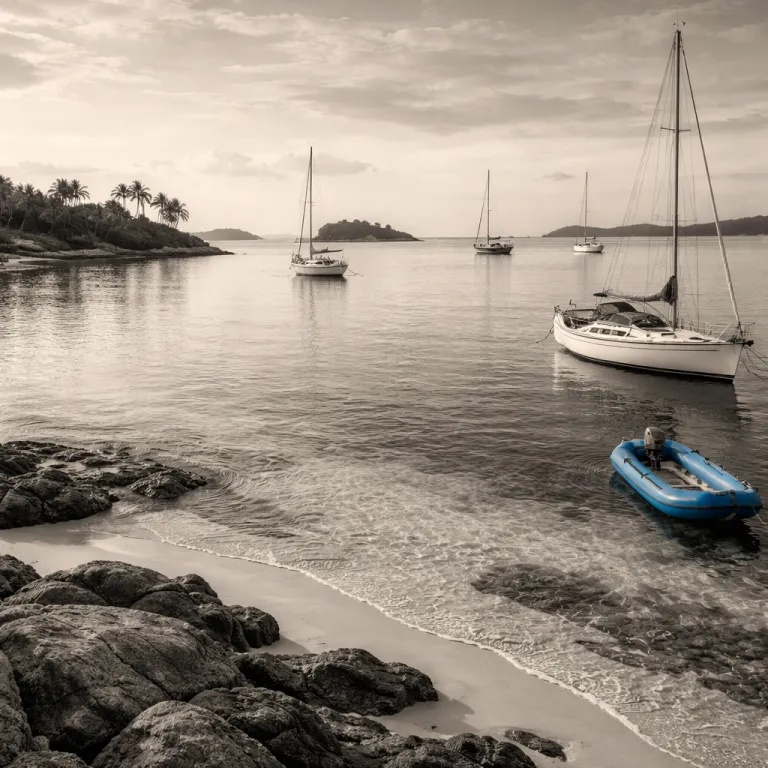
Why the Grenadines outshine other Caribbean sailing playgrounds
The Grenadines sit quietly between Grenada and Saint Vincent, yet they define Caribbean sailing for couples who value privacy. This slender chain of around 32 inhabited and uninhabited islands and cays offers shorter sailing days, wildly clear water and a softer kind of glamour than the British Virgin Islands or the Bahamas. When you use any serious Saint Vincent and the Grenadines cruising guide, you quickly see how each island and bay feels like a different private world.
Compared with the BVI, the Grenadines deliver fewer crowds, more wild anchorages and a stronger sense of local Vincentian culture on every island. The Bahamas may tempt with shallow banks and white sand beaches, but the distances in nautical miles between islands are longer and the water can feel less sheltered for a first sailing holiday. Here, a typical sailing itinerary between Saint Vincent and Grenada strings together short hops of 10 to 25 nautical miles, so each day feels relaxed rather than like a delivery passage; for example, the run from Bequia to Mustique is roughly 10 nm, usually two to three hours under sail in moderate trade winds.
For couples, that balance matters because your sailing vacation should feel like a floating island retreat, not a test of endurance. You can sail from Saint Vincent to Bequia in under half a day, then continue through the Grenadines islands to Mustique, Canouan, Mayreau and the Tobago Cays with time left for snorkelling and long lunches. The result is a style of Caribbean sailing where you wake in one quiet bay, swim in water as clear as glass, then arrive at another island in time for sunset cocktails on deck.
Bareboat or crewed yacht charter: choosing the right style of escape
Every thoughtful Grenadines trip planner starts with one question: will you take a bareboat yacht charter or opt for a fully crewed yacht experience? A bareboat charter means you or your partner handle the sail plan, navigation and anchoring between each island, while a crewed yacht charter adds a professional skipper and often a chef. For couples new to Saint Vincent and the Grenadines, the second option usually turns a sailing holiday into a true island retreat, with more time in the water and less time worrying about the wind.
If you already hold a recognised skipper qualification and have logged coastal miles, a bareboat sailing itinerary through the Grenadines can be deeply rewarding. You will plot each day’s route between islands, judge the best bay for shelter and decide when to move on from Bequia, Union Island or the Tobago Cays Marine Park. The learning curve is real though, which is why training outfits such as Nautilus Sailing and Caribbean Sailing School now run multiday Caribbean sailing courses that teach dozens of individual seamanship skills during a sailing vacation.
For first timers, a crewed yacht often makes more sense because it removes stress from the equation. Your skipper knows the reefs around the Tobago Cays, the gusts that roll off Saint Vincent and the best time to enter Chatham Bay on Union Island. To go deeper into the practicalities of choosing and pricing a yacht charter in the wider region, read our dedicated guide to planning your first luxury Caribbean yacht charter sailing holiday on Stay in Caribbean, which breaks down costs, cabin layouts and service levels in detail.
A seven day Grenadines sailing itinerary for couples
This Grenadines sailing holiday guide focuses on a one week route that balances sailing time, island exploration and quiet anchorages. Many yacht charters begin in Saint Vincent, although some couples now start in Grenada and work north through the islands before looping back. The official dataset for the region suggests a flexible period of seven to fourteen days, but a focused seven day sailing itinerary already delivers a rich taste of life in Saint Vincent and the Grenadines.
On day one, you sail from Saint Vincent to Bequia, a friendly island with a deep whaling history, a lively bay at Admiralty and a string of white sand beaches on the south coast. This leg usually runs around 9 to 12 nautical miles, an easy first day under sail. Day two might take you from Bequia to Mustique, where low slung villas hide in the hills and the island’s single main bay offers secure moorings, polished service and a glamorous yet understated scene. Day three and four often combine Canouan and Mayreau, with Salt Whistle Bay on Mayreau offering a classic Caribbean beach curve and a short hike to a hilltop church that surveys the Tobago Cays Marine Park.
Day five is usually reserved for the Tobago Cays, a protected marine reserve where sea turtles graze on the seagrass and the water glows in improbable shades of turquoise. The hop from Mayreau to the Cays is typically under 5 nautical miles, so you can arrive early and pick your spot. Day six brings you to Union Island, where Chatham Bay curves in a perfect horseshoe and the main town offers a more grounded Vincentian sailing atmosphere with rum shops and local restaurants. On day seven, many couples either return slowly towards Saint Vincent or continue south towards Grenada, a route we explore in our analysis of what happens when your secret island gets popular in our Dominica and Grenada feature on Stay in Caribbean.
Sample seven day route at a glance
| Day | Route | Approx. distance (nm) |
|---|---|---|
| 1 | Saint Vincent → Bequia | 9–12 |
| 2 | Bequia → Mustique | 10 |
| 3–4 | Mustique → Canouan → Mayreau | 15–20 total |
| 5 | Mayreau → Tobago Cays | 3–5 |
| 6 | Tobago Cays → Union Island | 5–7 |
| 7 | Union Island → Saint Vincent or Grenada | 25–45 |
Costs, seasons and logistics for a Grenadines sailing holiday
Any honest Grenadines cruising overview must address cost, timing and access with clarity. Peak season for Caribbean sailing in this corridor generally runs from December to April, when the trade winds are settled and the water stays warm yet refreshing. Shoulder months around May and June often bring calmer anchorages, more flexible yacht charter availability and slightly lower weekly rates for both monohulls and catamarans, while July and August can offer steady winds and fewer crowds for experienced crews.
For a couple booking a modern 12 to 15 metre yacht, a bareboat charter in the Grenadines typically starts around €3,500–€5,000 per week in low season and from roughly €5,000–€7,500 in high season, before adding fuel, provisioning and marine park fees (based on sample price lists from regional charter operators). A fully crewed yacht of similar length, with a professional skipper and chef, usually begins in the low five figures for seven days, depending on the season, yacht age and level of service. Flights usually route through Barbados or Saint Lucia into Saint Vincent or Grenada, where local partners and marinas such as Blue Lagoon or Port Louis coordinate transfers to your yacht and help you stock up on provisions before departure.
Practicalities matter as much as romance on a sailing vacation, especially when you are new to Grenadines sailing. You will want to check weather forecasts regularly, carry cash for mooring and marine park fees and respect local customs on each island, from Bequia to Union Island. As one official regional guide notes without embellishment, “Stock up on provisions before departure”, “Check weather forecasts regularly”, and “Respect local customs and regulations”; those three lines summarise the mindset that keeps a sailing holiday smooth.
Where to anchor, swim and sleep: bays and island retreats worth your time
The joy of any Grenadines sailing holiday guide lies in the anchorages, because each bay shapes the mood of your evening. Admiralty Bay on Bequia feels like a natural amphitheatre, with yachts swinging gently while couples step ashore for grilled lobster and barefoot bars along the beach. Further south, Salt Whistle Bay on Mayreau offers a narrow strip of white sand with water lapping on both sides, a classic image of Caribbean islands that still feels surprisingly intimate.
In the Tobago Cays Marine Park, your yacht floats behind a horseshoe reef where sea turtles glide under the hull and the water clarity ranks among the best in the region. Many crewed yacht teams time their arrival so you can snorkel in the late afternoon, when the light softens and the protected reserve feels almost empty. Chatham Bay on Union Island brings a different mood again, with a wide bay, a backdrop of forested hills and a handful of low key beach bars that light up at night while the rest of the island sleeps.
When you are ready for a night on land, the wider Caribbean offers a network of luxury island retreats that pair well with a week under sail. Some couples combine a Grenadines sailing vacation with a few nights at refined all inclusive resorts elsewhere in the region, using premium Caribbean beach hotels as a soft landing after life on a yacht. Whether you end your route near Saint Vincent or in Grenada, consider one final night in a premium hotel to enjoy long showers, crisp sheets and a last view of the bay before your flight home.
How to plan your own Grenadines route with confidence
Planning your own route through Saint Vincent and the Grenadines can feel daunting at first glance, which is why a structured Grenadines sailing holiday guide helps. Start by deciding how many days you can realistically spend under sail, then map a sailing itinerary that limits each leg to manageable nautical miles between islands. For many couples, that means no more than four or five hours of sailing per day, leaving ample time for swimming, snorkelling and slow lunches on the beach.
Next, choose whether your yacht charter will be bareboat or crewed, and be honest about your comfort level with navigation, anchoring and reading the water. Local sailors and guides know the subtleties of each island, from the gusts that funnel through the Bequia channel to the swell that sometimes rolls into Chatham Bay on Union Island. They also understand the rhythms of the Tobago Cays Marine Park, advising on the best time to visit the reserve so you share the water with sea turtles rather than with crowds.
Finally, remember that a sailing holiday is as much about stillness as movement, especially when you are exploring islands by yacht for the first time. Build at least one lay day into your sailing vacation, perhaps on Bequia or Mayreau, where you can leave the sail covers on, walk the island and linger on a white sand beach without watching the clock. The Grenadines reward that slower pace, turning a simple week of Grenadines sailing into a quietly luxurious chapter in your wider Caribbean travels.
Key figures for sailing the Grenadines
- The Grenadines comprise roughly 32 islands and cays between Saint Vincent and Grenada, creating one of the most compact yet varied Caribbean sailing grounds in the region (source: Saint Vincent and the Grenadines Tourism Authority and regional cruising guides).
- Typical sailing trips in the area last between 7 and 14 days, which allows time to visit Bequia, Mustique, Canouan, Mayreau, the Tobago Cays and Union Island without rushing each bay (source: regional sailing operators’ published itineraries).
- Training providers such as Nautilus Sailing and Caribbean Sailing School report teaching a broad syllabus of coastal cruising and yacht-handling skills on their multiday courses, reflecting the technical depth available to first time skippers in the Saint Vincent and the Grenadines corridor.
- Official guidance for visitors notes that some islands charge mooring or marine park fees, so carrying cash remains essential when entering the Tobago Cays Marine Park or anchoring near smaller islands; fees are commonly collected per person or per yacht per night, with typical Tobago Cays Marine Park charges in the region of US$10 per person per day plus a modest yacht fee (source: local tourism and park authorities).
- Steady trade winds and warm water make the Grenadines a reliable sailing vacation choice from December to April, while May to August offers steady winds and fewer crowds according to regional Q&A resources and charter company guidance.
Frequently asked questions about sailing the Grenadines
What is the best time to sail the Grenadines?
Regional guidance highlights that “June to August offers steady winds and fewer crowds,” while many yacht charters also operate from December to April, when the trades are settled and the water stays warm. Couples should balance wind strength, crowd levels and personal holiday dates when choosing their preferred window, with December to April ideal for classic trade-wind conditions and June to August better for quieter anchorages.
Do I need a visa to visit the Grenadines?
Visa requirements vary; check with local authorities or your nearest consulate before booking flights and a yacht charter. Many travellers from Europe and North America receive visa free entry for short stays, but rules differ by nationality. Always confirm entry conditions for Saint Vincent and the Grenadines as well as any transit islands on your route.
Are there mooring or marine park fees in the Grenadines?
Yes, some islands and marine reserves charge fees, especially in the Tobago Cays Marine Park where funds support conservation of coral and sea turtles. The official Q&A for the region notes that “Some islands charge fees; it's advisable to carry cash.” Your skipper or charter base will brief you on current rates before departure, but as a rough guide expect per person daily park fees plus separate mooring or anchoring charges collected by authorised wardens.
Is the Grenadines suitable for first time sailing couples?
The Grenadines are well suited to first time sailing couples when you choose a crewed yacht or sail with an experienced skipper. Distances in nautical miles between islands are short, and there are many sheltered bays such as Admiralty Bay, Salt Whistle Bay and Chatham Bay. Training options and local guides further increase safety and confidence for new sailors.
How long should we plan for a Grenadines sailing holiday?
A seven day sailing itinerary already allows you to visit Saint Vincent, Bequia, Mustique, Canouan, Mayreau, the Tobago Cays and Union Island at a comfortable pace. The regional dataset suggests that many sailing trips last 7 to 14 days, which gives more time for lay days and deeper island exploration. Couples with flexible schedules often choose ten days as a sweet spot between cost, time and relaxation.