
Where to Stay on Colombia’s Caribbean Coast: Cartagena, Santa Marta, and Palomino
Is Colombia’s Caribbean coast a good place to stay?
Heat hits first on the malecón in Santa Marta, then the sea breeze softens it. This is the rhythm of Colombia’s Caribbean coast: intense, then languid, never quite predictable. For a hotel stay, it is an excellent choice if you want a mix of historic city life, wild beaches, and access to the coffee region on the same trip, with stays ranging from intimate boutique hotels to relaxed eco-lodges.
Cartagena de Indias offers the most polished experience, especially inside the walled city and around the Bocagrande peninsula. Here you will find urban hotels with sweeping sea views, refined service, and a clear sense of occasion the moment you step into the lobby. Santa Marta and nearby fishing villages feel more relaxed, better suited to travelers who prefer a place to unwind in a hammock rather than a city rooftop bar.
Further east, the stretch between Palomino and the foothills of the Sierra Nevada feels almost like a different country. Bungalows and small casas sit between jungle and sea, with the sound of waves replacing city traffic. If you are looking for the best balance between comfort and nature on the coast of Colombia, this is where the trade-off becomes interesting: fewer urban comforts, more space, more silence.
Cartagena vs Santa Marta vs Palomino: choosing your base
Stone walls, horse-drawn carriages, and the glow of lanterns on Calle de la Mantilla define an evening in the old city of Cartagena. Staying here suits travelers who want to walk out of their hotel door straight into galleries, plazas, and restaurants. The atmosphere is urban and theatrical, with hotels often set in restored casas around central courtyards and a swimming pool tucked under palm trees.
Santa Marta, by contrast, is a working port city with a more local rhythm. Around Parque de los Novios and the streets leading to the bay, you will find smaller hotels in colonial buildings, often with rooftop terraces looking over the sea. It is a strategic place for a short stay if you plan to explore Tayrona National Natural Park or the Sierra Nevada, but the city itself feels less curated than Cartagena.
Palomino sits roughly 70 km east of Santa Marta, where the highway runs close to the beach and the jungle presses in from the mountains. Here, many hotels use bungalows or low-rise structures in wood and thatch, with sandy paths instead of paved courtyards. Choose Palomino if you prefer a place to relax with bare feet, open-air showers, and the sound of the river meeting the sea rather than nightlife or shopping.
- Cartagena: best for first-time visitors, culture, and boutique hotels; pros include walkable historic streets and dining, while cons are higher prices and busier evenings.
- Santa Marta: ideal for access to Tayrona and the Sierra Nevada; pros are lower costs and a local feel, with the trade-off of more traffic and a less polished waterfront.
- Palomino: suited to slow travel and nature; pros include wide beaches and relaxed bungalows, while cons are basic infrastructure and limited nightlife.
What to expect from hotels on the Caribbean coast
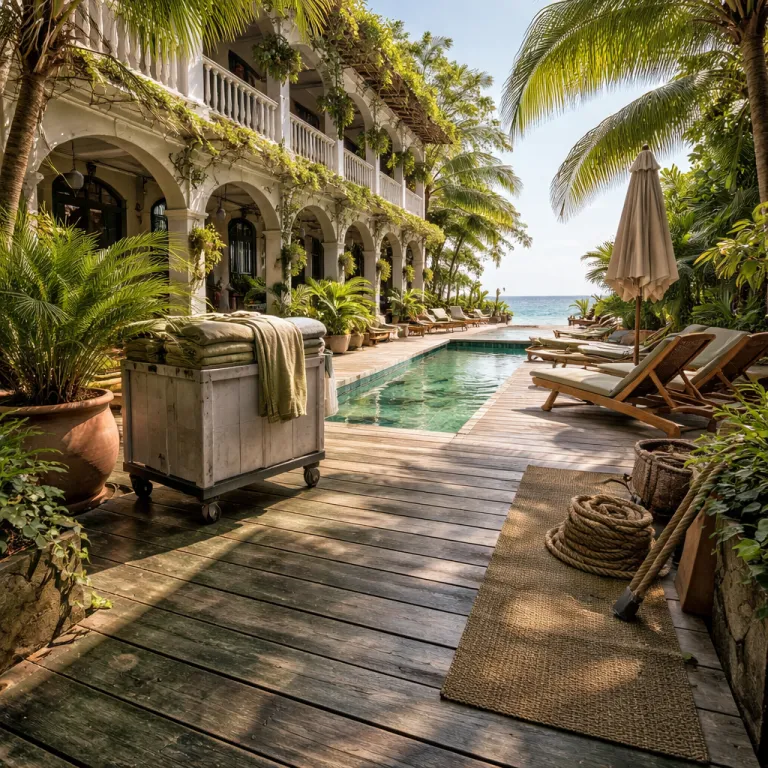
Courtyards, patios, and water features are the backbone of coastal hospitality in Colombia. In the cities, many properties occupy former casas with thick stone walls, high ceilings, and internal gardens where you will find a swimming pool shaded by bougainvillea. Rooms tend to be compact in the historic center, but the atmosphere compensates: tiled floors, wooden shutters, and the scent of coffee drifting up at breakfast.
Along the wilder coast, especially near Palomino and the smaller beaches east of Santa Marta, the architecture changes. Expect stand-alone bungalows or a single bungalow raised on stilts, often with direct sea views and open verandas. These hotels lean into natural materials and cross-ventilation; air flows, light shifts, and you feel the seasons more directly than in a sealed city tower.
Service style also varies. In Cartagena, staff are used to international guests and a more polished, almost urban-luxury approach, similar to what you might find in a high-end hotel in a major city. In smaller coastal places, the experience is more personal and informal, with local teams who might share tips about a nearby river walk or a family-run café rather than a printed city guide.
- In Cartagena, mid-range boutique hotels in the historic center often start around US$150–250 per night, with high-end casas and sea-view suites in Bocagrande from roughly US$300–600 in peak months.
- In Santa Marta, characterful colonial properties and simple city hotels usually range from about US$80–200 per night, with higher rates for larger suites or direct bay views.
- Near Palomino, eco-lodges and beach bungalows typically fall between US$70–180 per night, with premium stilted cabins or private plunge pools sometimes reaching US$220–250.
Linking the Caribbean coast with Bogotá and the coffee region
Domestic flights make it easy to combine a stay on the Caribbean coast with time in Bogotá or the coffee region. Many travelers start with two or three nights in the capital, exploring the historic center around La Candelaria, then fly north to the sea. The contrast is sharp: from cool Andean mornings and serious city energy to humid evenings and the slow roll of the Caribbean.
For those interested in the coffee triangle, it is entirely feasible to design a triangle Colombia itinerary: Bogotá, the coffee region, then the coast. In the coffee triangle you will find haciendas surrounded by plantations, sometimes with architecture reminiscent of Hacienda Bambusa and similar rural estates. These stays feel more contemplative, with long breakfasts, coffee tastings, and views over green hills rather than the sea.
Planning the order matters. Ending on the Caribbean coast often works best, turning the final days into a place to relax after more active city and coffee-region touring. When you check flight times, look for connections that avoid long layovers in Bogotá on the way to or from the coast of Colombia, especially if you are moving between Santa Marta, Cartagena, and inland cities in a single trip.
- Bogotá to Cartagena or Santa Marta is usually a direct flight of about 1.5–1.75 hours, with several departures daily on major airlines; schedules and typical fares are well documented by carriers such as Avianca and LATAM and by the Aeronáutica Civil de Colombia as of early 2024.
- Cartagena to Santa Marta overland takes roughly 4–5 hours by private transfer, while Santa Marta to Palomino is closer to 1.5–2 hours along the coastal highway.
- From the coffee region airports near Armenia or Pereira to Cartagena, most routes connect via Bogotá, with total travel times commonly around 4–6 hours including transit, as reflected in published timetables on major booking platforms in 2024.
How to choose the right area and property style
Street by street, the feel of a stay can change. Inside Cartagena’s walls, a hotel on Calle del Curato will immerse you in constant movement, with music from nearby plazas and late-night footsteps on the cobblestones. A few hundred metres away in San Diego, the same style of casa with an internal courtyard and swimming pool can feel noticeably quieter, better for travelers who want to relax after dinner rather than stay out late.
In Santa Marta, proximity to the waterfront promenade and the historic center shapes your experience. A city hotel near Carrera 3 and the bay gives you quick access to restaurants and the marina, while properties further inland feel more residential and local. On the open coast near Palomino, the key decision is distance from the sea: some bungalows sit directly on the sand, others are set back among trees, trading immediate sea views for more shelter from wind and salt.
Think in terms of your own rhythm. If you like to wake early, swim, and then wander a city, Cartagena or Santa Marta make sense. If your ideal day is a late breakfast, a book in a hammock, and a quiet drink under the stars, the smaller coastal villages and their low-rise hotels on Colombia’s Caribbean coast offer a better match than any high-rise tower could provide.
- Travelers who prioritise design and dining might focus on Cartagena’s walled city, while those who value access to national parks often prefer Santa Marta as a base.
- Guests seeking a retreat-style stay with yoga decks, river tubing, and long beach walks usually gravitate toward Palomino and the nearby jungle-backed bays.
- Families often split time, spending a few nights in a central Cartagena hotel and then moving to a quieter stretch of coast for more space and softer evenings.
Practical checks before you book
Room layout and building style deserve more attention here than in many destinations. In historic centers, some rooms in older casas have limited natural light or face internal patios rather than the sea; others open directly onto a terrace by the swimming pool. On the open coast, a bungalow closest to the sea may have the best view but also more exposure to wind and the constant sound of waves, which not everyone finds restful.
Seasonality is another quiet but crucial factor. The Caribbean coast has warm temperatures year-round, but local seasons change the feel of a stay: some months bring calmer seas and clearer water, others more dramatic waves and stronger sun. When you check availability, consider whether you prefer a softer, hazy light and quieter beaches or the brighter, more energetic months when the city and coast feel busier.
Finally, look closely at how each place describes its atmosphere. Some hotels emphasize design, art, and a more urban, almost boutique sensibility, even when they avoid the label of hotel boutique. Others lean into nature, with bungalows, outdoor showers, and minimal separation between you and the elements. The best choice is the one whose daily rhythm you can already imagine, from the first coffee of the morning to the last sound you hear before sleep.
- From roughly December to March, conditions are typically drier with stronger trade winds and livelier waves, while April to June and September to November often feel calmer, with gentler seas and fewer crowds.
- In Cartagena and Santa Marta, popular city festivals and holiday periods can raise nightly rates and fill smaller hotels quickly, so advance booking is wise if you prefer specific room types.
- On the quieter coast near Palomino, some eco-lodges have limited air conditioning or rely on fans and sea breezes, so check details carefully if you are sensitive to heat or humidity.
FAQ
Is Colombia’s Caribbean coast safe for a hotel stay?
Staying in established areas such as the historic center of Cartagena, the main districts of Santa Marta, and the central zone of Palomino is generally considered appropriate for visitors who take normal urban precautions. Choose hotels on well-frequented streets, use official transport, and follow local advice from your property about where to walk at night, as you would in any coastal city.
How many days should I plan on the Caribbean coast of Colombia?
A focused coastal stay works well in four to five nights if you choose a single base such as Cartagena or Santa Marta. If you want to combine a city, a quieter beach area like Palomino, and perhaps a short visit inland toward the Sierra Nevada, plan at least seven to ten days to avoid spending most of your time in transit.
Can I combine the Caribbean coast with the coffee region in one trip?
It is entirely possible to combine the Caribbean coast with the coffee region and Bogotá in a single itinerary. Many travelers fly into Bogotá, continue to the coffee triangle for a few nights on a rural estate, then end with several days by the sea in Cartagena or Santa Marta, creating a varied triangle Colombia journey that balances culture, landscapes, and relaxation.
What type of hotels will I find near Palomino and the Sierra Nevada?
The area around Palomino and the lower slopes of the Sierra Nevada is known for small-scale coastal properties, often using stand-alone bungalows or low-rise buildings in natural materials. These places usually focus on a calm atmosphere, proximity to the sea or river, and a close connection with the surrounding landscape rather than a classic city-hotel experience.
When is the best time to stay on Colombia’s Caribbean coast?
The coast of Colombia offers warm weather throughout the year, but the character of your stay shifts with the seasons. Some months bring calmer seas and clearer skies that suit swimming and boat trips, while others feel more dramatic, with stronger sun and livelier waves; your ideal time depends on whether you prioritise beach days, city exploration, or a quieter place to relax by the sea.