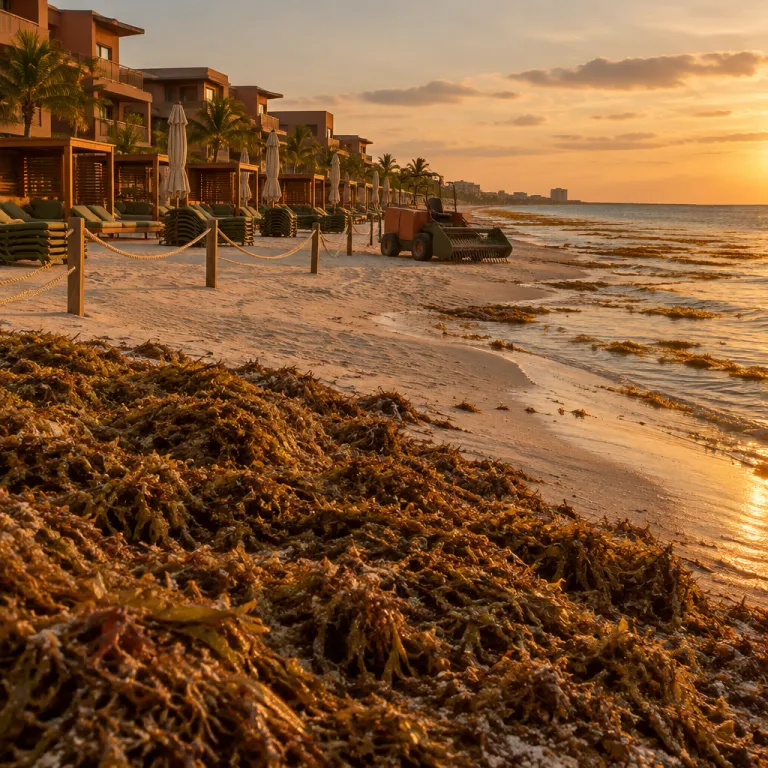
How cancun hotel sargassum cleanup failures reshape the luxury beach experience
High end travelers arrive in Cancún expecting turquoise water and a flawlessly clean beach. When they instead face visible seaweed piles and clear cancun hotel sargassum cleanup failures, the entire perception of the Mexican Caribbean can change in a single day. Luxury guests quickly reassess the risk of returning to these beaches and start comparing other Caribbean coasts that appear to manage seaweed more consistently.
The sargassum that reaches the coast of México is a drifting brown seaweed, carried by currents from the Atlantic and trapped along the Mexican Caribbean and wider west coast of the region. On many Cancún beaches and other Quintana Roo beaches, this seaweed now defines the sargassum season more than the traditional dry or rainy season, especially from late spring to around July. When beach clean operations are inconsistent, even a premium Cancún hotel in the hotel zone can feel less exclusive than a modest stay on a clean beach elsewhere.
Guests booking a luxury trip to the Riviera Maya, Playa del Carmen or Isla Mujeres usually pay for direct access to the beach and uninterrupted sea views. When sargassum cleanup failures leave the playa partially closed or only partly open, the value of those premium rooms drops sharply in the eyes of discerning travelers. As one repeat visitor put it in early 2023, “I don’t mind some seaweed, but I do expect the hotel to treat it as seriously as the pool or the spa.” This is why understanding the real sargassum outlook for Cancún, Puerto Morelos and the wider Quintana Roo coast has become as important as checking the weather forecast.
Reading the sargassum outlook before you book a Caribbean beachfront haven
Before confirming a high value reservation, sophisticated travelers now study the sargassum outlook for Cancún and other Mexican Caribbean destinations. They look at satellite based forecasts, local municipal beach clean schedules and even daily photos from specific Quintana Roo beaches to gauge the real situation. This extra research helps reduce the risk of paying for a five star stay during the worst part of the sargassum season.
For a luxury trip focused on beach time, the month you choose matters as much as the property itself, especially around July when seaweed landings can peak on parts of the Quintana Roo coast. Some stretches of the Riviera Maya and Playa del Carmen are more exposed than others, while Isla Mujeres and Playa Norte sometimes enjoy clearer water thanks to currents. Comparing these micro locations across the Mexican Caribbean can be more decisive than comparing room categories or spa menus.
Families planning multi generational holidays or milestone celebrations should also consider how flexible their plans are if the beach is not fully open. A wedding party staying in the Cancún hotel zone, for example, might plan more inland excursions to Chichén Itzá or cenote tours if the playa is affected by seaweed on a given day. For inspiration on how premium resorts reimagine celebrations beyond the shoreline, you can review this detailed guide to a Hyatt Ziva Riviera Cancún wedding experience, which shows how thoughtful planning can offset temporary beach limitations.
Travelers comparing Cancún with other Caribbean destinations also weigh how different islands manage beach clean operations and long term climate change adaptation. Some resorts in Turks and Caicos, for instance, highlight how they maintain a consistently clean beach even during challenging periods. A recent opening at Treasure Beach Village within a major family resort in Turks and Caicos, covered in this analysis of Caribbean family luxury investments, illustrates how serious capital is now flowing into resilient beachfront design.
Which parts of Cancún and Quintana Roo handle sargassum best
Not every stretch of the Mexican Caribbean coast experiences seaweed in the same way, and not every Cancún hotel responds with the same urgency. Some properties in the hotel zone invest in dedicated beach clean équipes that start at dawn and work throughout the day. Others rely on municipal services, which can lead to visible sargassum cleanup failures when landings are heavy.
On Isla Mujeres, especially around Playa Norte, currents sometimes keep the water clearer than on exposed Quintana Roo beaches of the mainland, although this is never guaranteed. Guests who split their trip between Cancún and Isla Mujeres often report that the island feels more relaxed, with smaller playas and a more manageable sargassum season. However, when seaweed does arrive, limited machinery on the island can slow the beach clean process compared with large scale resorts on the mainland.
Further south along the Riviera Maya, areas near Puerto Morelos and Playa del Carmen show strong contrasts between properties that treat sargassum as a core operational priority and those that do not. Some resorts deploy floating barriers offshore to divert seaweed before it reaches the beach, while others focus on rapid removal once it lands on the playa. Travelers who value a consistently clean beach should ask specific questions about daily routines, equipment and contingency plans rather than accepting generic assurances.
When comparing Cancún with other high end Caribbean destinations such as Saint Barthélemy, many travelers notice differences in how smaller islands manage their limited but precious beaches. An in depth feature on elegant shores and refined stays on the beaches of St Barth shows how some properties there focus on preserving intimate coves rather than long continuous strands. This contrast helps explain why some guests now split their holidays between the Mexican Caribbean for cultural excursions and other islands for guaranteed tranquil shorelines.
Climate change, long term planning and what luxury guests should expect
The rise in sargassum along the Mexican Caribbean is closely linked to broader climate change patterns in the Atlantic. Warmer water and nutrient rich runoff have contributed to larger seaweed blooms that eventually reach the coast of México and other parts of the Caribbean. For Cancún hotels, this is no longer a short term inconvenience but a structural challenge that demands long term planning.
Resorts that treat sargassum season as an occasional anomaly often suffer repeated cleanup failures, frustrating guests who expected a pristine beach every day of their trip. In contrast, properties that integrate seaweed management into their environmental and financial strategies tend to maintain a more reliable guest experience. They invest in specialized machinery, staff training and partnerships with local authorities across Quintana Roo to coordinate beach clean operations along shared stretches of playa.
From a traveler’s perspective, this means asking more technical questions before booking a high value stay in Cancún, Puerto Morelos or Playa del Carmen. You might inquire whether the resort participates in regional sargassum outlook monitoring, how quickly they can clear the beach after a heavy landing and whether they have alternative water based experiences such as protected lagoons or rooftop pools. These details reveal whether management views seaweed as a daily operational reality or a public relations issue to be minimized.
Climate change also raises questions about the resilience of coastal infrastructure along the west coast of the Atlantic basin, including the Mexican Caribbean. Some developers now design new properties with elevated walkways, dune restoration and vegetation buffers that protect both the beach and the resort. Guests who value sustainability can support these efforts by choosing properties that publish transparent environmental data and clear commitments to long term coastal stewardship.
Practical booking strategies to reduce your sargassum risk
Luxury travelers can significantly reduce their exposure to cancun hotel sargassum cleanup failures by adjusting how and when they book. The first step is to align your travel dates with historical sargassum season patterns for the Mexican Caribbean, while remembering that nature never follows a strict calendar. Many frequent visitors now keep their plans flexible, confirming flights and hotels closer to departure once the short term sargassum outlook becomes clearer.
Choosing the right micro location within Quintana Roo is just as important as choosing the right property category. Some guests prefer the northern arc from Cancún to Isla Mujeres and Cozumel ferry routes, where currents can sometimes keep water clearer, while others opt for sheltered coves near Puerto Morelos or certain parts of the Riviera Maya. When evaluating options, look beyond generic references to the Mexican Caribbean and focus on how each specific stretch of playa behaves during peak seaweed periods.
Direct communication with the property remains one of the most effective tools for informed decision making. Ask for recent unedited photos of the beach, details on daily beach clean routines and clarification on whether all facilities remain open when seaweed landings are heavy. If a resort hesitates to share this information, that hesitation itself becomes a useful data point for your booking strategy.
Travelers planning complex itineraries that combine Cancún, Playa del Carmen, Isla Mujeres and cultural excursions to Chichén Itzá should also consider travel insurance that covers weather related disruptions. While sargassum is not a storm, it can affect the perceived value of a beach focused trip if cleanup operations fail. A flexible approach, supported by transparent communication and realistic expectations, usually leads to higher satisfaction even when nature does not fully cooperate.
Beyond the beach: elevating your Mexican Caribbean stay when the seaweed arrives
Even when cancun hotel sargassum cleanup failures limit direct beach access, the Mexican Caribbean still offers rich experiences that justify a premium stay. Many high end resorts in Cancún, Playa del Carmen and along the Riviera Maya now curate inland and offshore activities that do not depend on a perfectly clean beach. Guests can shift their focus from the immediate playa to the broader cultural and natural landscape of Quintana Roo.
Day trips to Chichén Itzá, Tulum’s archaeological zone or lesser known Mayan sites provide depth and context that many beach only holidays lack. Inland cenotes offer clear freshwater swimming far from the seaweed that accumulates along the coast, while protected lagoons and mangrove tours reveal another side of the Mexican Caribbean ecosystem. These experiences often become the highlight of a trip, especially when the water near the hotel is affected by seaweed for several days in a row.
On the water, some excursions can avoid the worst of the sargassum by heading to areas where currents keep the surface clearer. Boat trips around Isla Mujeres, visits to Playa Norte or carefully timed journeys toward Cozumel can sometimes offer better swimming conditions than the main Quintana Roo beaches near Cancún. However, travelers should always verify current conditions with reputable local operators, as patterns shift quickly and safety remains the priority.
Within the resort itself, thoughtful programming can transform a stay even when the playa is not at its best. Rooftop pools, refined dining, wellness rituals and curated cultural performances help maintain a sense of occasion that justifies the investment in a luxury property. When management communicates honestly about beach conditions and offers meaningful alternatives, guests often feel that their overall experience remains aligned with the promise of a high end Mexican Caribbean escape.
Key figures on sargassum, Cancún beaches and traveler decisions
- According to monitoring by the University of South Florida’s Optical Oceanography Lab, the Atlantic Sargassum belt reached an estimated 13 million tonnes at its peak in June 2018, illustrating the scale of seaweed that can eventually affect the Mexican Caribbean and Cancún beaches. The lab’s Sargassum Watch System continues to publish monthly bulletins that track these blooms, with 2023–2024 updates confirming that large seasonal accumulations remain a recurring risk.
- Data summarized by the Secretaría de Marina in México indicate that several hundred kilometres of the Quintana Roo coast can be impacted during intense sargassum season periods, which explains why coordinated regional beach clean strategies are essential rather than isolated efforts by a single Cancún hotel. Recent annual reports for 2022 and 2023 describe joint operations with state and municipal authorities, including the deployment of coastal barriers and collection vessels.
- Surveys by the Caribbean Hotel and Tourism Association in the late 2010s and early 2020s have shown that a significant share of travelers reconsider their trip dates or destinations when they learn about heavy sargassum landings, confirming that cleanup failures directly influence booking behaviour for high end resorts. Follow up polling in 2023 continued to highlight seaweed management as a key factor in destination choice for repeat Caribbean visitors.
- Local authorities in Quintana Roo have invested millions of dollars in barriers, collection vessels and beach clean equipment over recent seasons, reflecting a shift from short term responses to more structured long term management of seaweed on Quintana Roo beaches. Public budget statements for 2021–2023 highlight both federal and state level contributions, as well as contracts with private operators for mechanical collection.
- Environmental studies published by regional research institutes since around 2015 link the increased frequency of sargassum events to broader climate change trends, reinforcing the need for hotels along the west coast of the Atlantic basin to integrate sea level rise, warming water and nutrient runoff into their long term planning. Recent 2022–2023 assessments emphasize that adaptive coastal design and transparent monitoring are now central to credible luxury beach operations.
FAQ about Cancún sargassum and luxury hotel stays
When is sargassum season most intense in Cancún and Quintana Roo ?
Sargassum season in the Mexican Caribbean typically intensifies from late spring through mid summer, with some of the heaviest landings often occurring around June and July. However, exact timing and intensity vary each year, so travelers should consult updated sargassum outlook reports before finalizing a trip. Short term forecasts and recent photos from specific playas in Cancún, Puerto Morelos and Playa del Carmen provide the most practical guidance.
Which areas near Cancún usually have the cleanest beaches during sargassum events ?
Conditions change frequently, but some travelers report that Isla Mujeres, especially Playa Norte, and certain sheltered coves along the Riviera Maya can sometimes have clearer water than exposed sections of the hotel zone. Currents, wind direction and local beach clean efforts all influence daily conditions. Checking recent guest photos and asking hotels directly about their current playa is essential.
How can I check whether my Cancún hotel manages seaweed effectively ?
Before booking, ask the property for recent unedited images of the beach, details on daily beach clean routines and information about any offshore barriers or collection systems. Reviews that mention cancun hotel sargassum cleanup failures or praise consistent clean beach conditions can also be revealing. Properties that answer specific questions transparently usually have more robust operational plans.
Does sargassum affect swimming safety in the Mexican Caribbean ?
Sargassum itself is not usually dangerous, but large accumulations can hide rocks, reduce visibility and sometimes attract small marine organisms that may irritate the skin. Decomposing seaweed can also affect water quality near the shore and create unpleasant odours. Guests should follow local guidance, avoid swimming in dense mats and choose clearer water when possible.
Should I avoid Cancún entirely because of sargassum ?
There is no need to avoid Cancún entirely, but travelers should plan with realistic expectations and flexible activities. By checking the sargassum outlook, choosing dates carefully and selecting properties with strong beach clean practices, many guests still enjoy rewarding stays. Diversifying your itinerary with inland excursions and cultural experiences also reduces dependence on perfect beach conditions every day.

Current Cancún and Quintana Roo sargassum outlook (updated 2024)